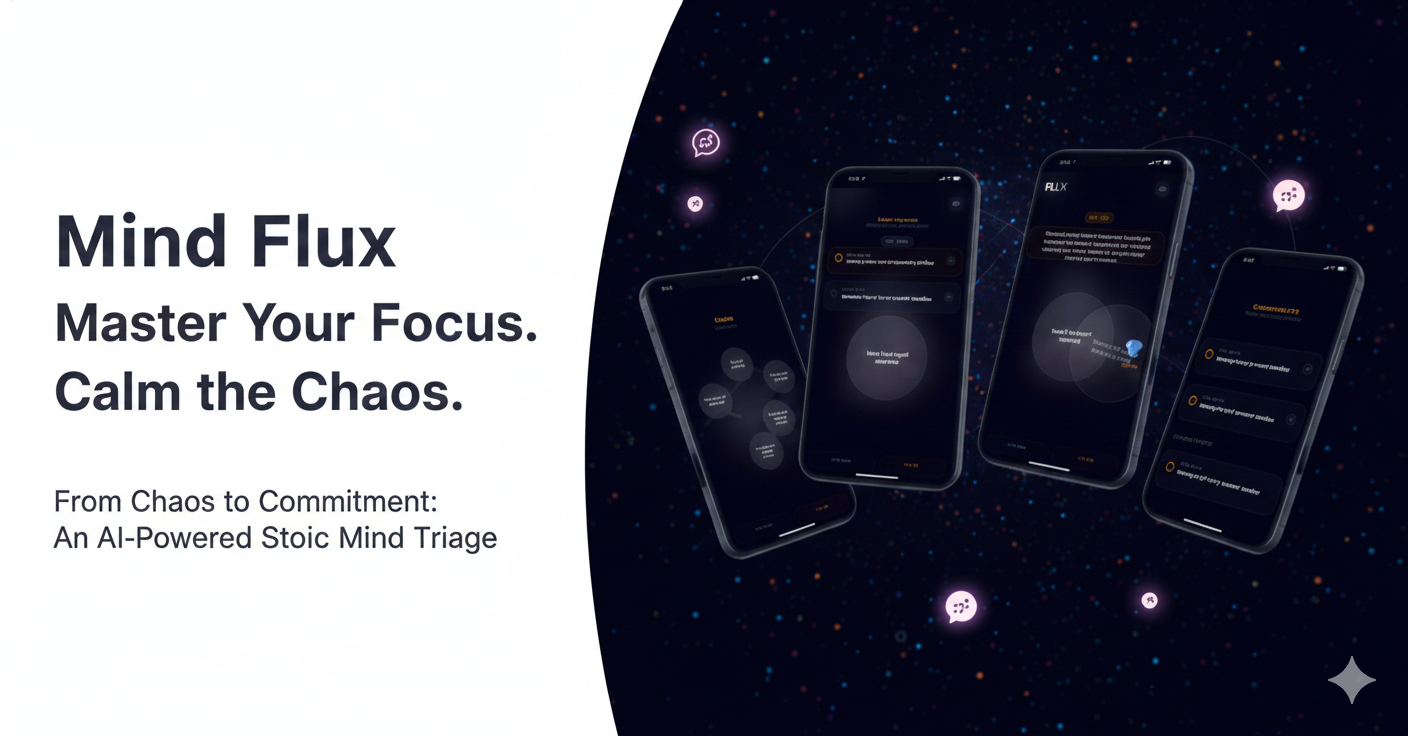
For people who lie awake at 2am with too much on their mind, and no one to tell it to. MindFlux is a place to say everything out loud, then figure out what actually matters.
Solo AI experiment: MindFlux was built by one designer, zero engineers. I used Claude Code, Figma MCP, Cursor, and Gemini to go from research to production on my own. This case study is about the product and design decisions, not the tools.

You're mentally exhausted but you can't explain why. You have a hundred things spinning in your head but no one to say them to. You don't need therapy right now, you just need somewhere to put it all down. But every app you try asks you to categorize, journal, or chat with a bot. That's more work, not less. Meanwhile, 17M+ adults in the US with ADHD struggle with time perception, so even captured tasks never get scheduled.
And then there's the current wave of mental health apps. Almost all of them are chatbots. They let you vent endlessly and feel momentarily heard, but chat becomes the destination, not the starting point. I didn't want to build another place to vent. I wanted to help people stop venting and start doing. Could a physical gesture, not a checkbox or a prompt, help people separate "things I can control" from "things I can't"?
 Headspace
 Youper
 Ash
AshMost capture tools force you to categorize as you go. MindFlux inverts this: voice or text brain dump first, then your stream of consciousness gets parsed into thought bubbles, and you triage when you're ready, not when the app demands it.
The voice input isn't a dictation tool. It's closer to thinking out loud with a smart listener. You say "I need to call the dentist and also the rent is due and I keep thinking about that thing my boss said," and the app separates, structures, and surfaces what matters. The capture feels effortless; the clarity comes from the organizing you can't do when you're overwhelmed.
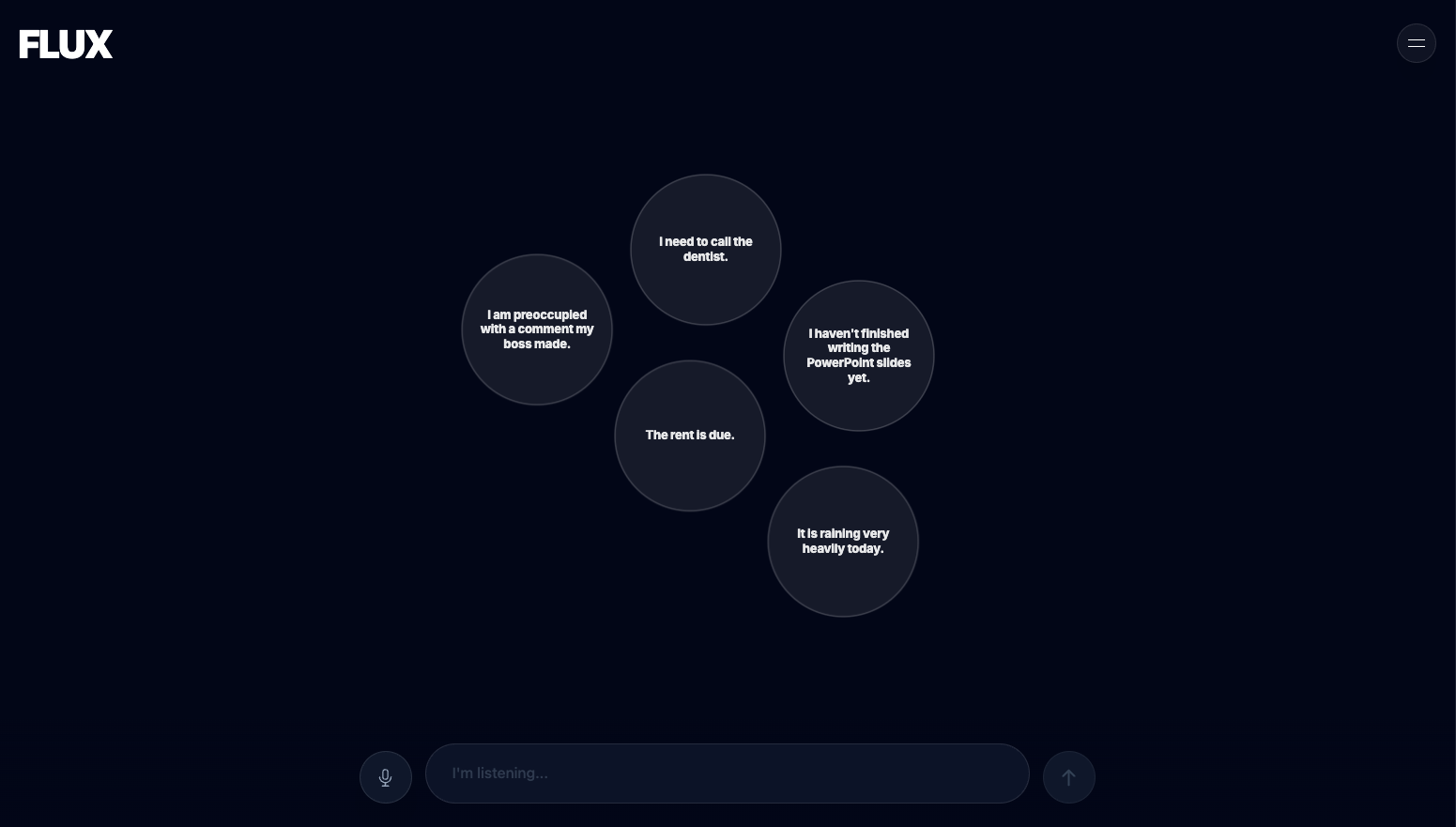
Voice + text input: "Listen to me..." prompt at the bottom. No required fields, no structure needed. Just talk or type
Parsed thought bubbles: Each worry or task becomes a floating bubble. "The stock market might crash" gets separated from "finish the proposal by Friday"
No categorization required: Bubbles float freely. No folders, no labels. The spatial layout itself communicates "this is temporary, not permanent"
Web + mobile, same experience: Works seamlessly across desktop and mobile. Brain dump at your desk or during a 2am anxiety spiral in bed, same zero-friction input either way
The naming came from Mel Robbins' The Let Them Theory, the #1 bestselling book of 2025: stop pouring energy into things you cannot control. That idea resonated deeply with me, but reading about it isn't the same as feeling it. I wanted to turn that philosophy into a physical interaction.
When your mind is full of too many things, you don't want to check a box or delete a row. You want to watch something dissolve. A bubble disappearing feels like weight leaving your shoulders. A checkbox feels like paperwork. So I chose swipe over tap, and bubbles over lists. The interaction had to feel like physically throwing something away.
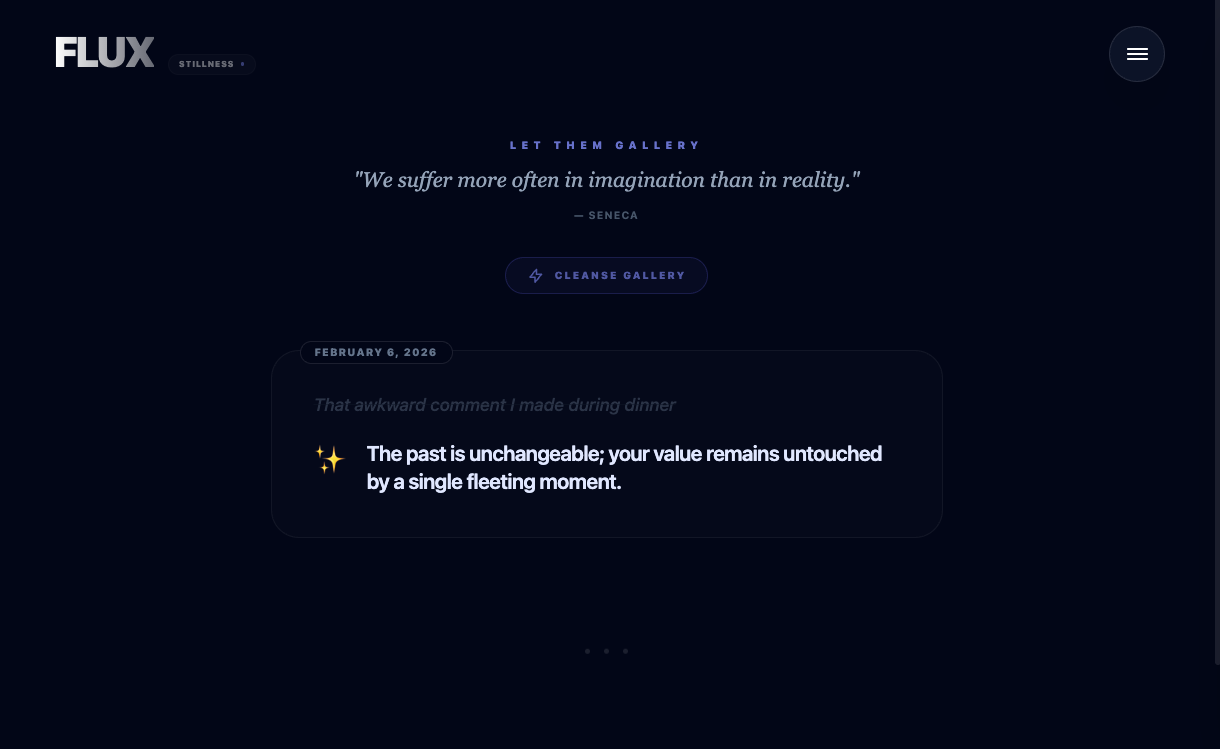
Swipe left to "Let Them," and the worry dissolves. Swipe right to "Let Me," and it gains weight and clarity. The gallery lets users revisit released worries in perspective, accompanied by Stoic philosophy quotes. When they're ready to permanently let go, the Cleanse Gallery provides a final ritual of release.
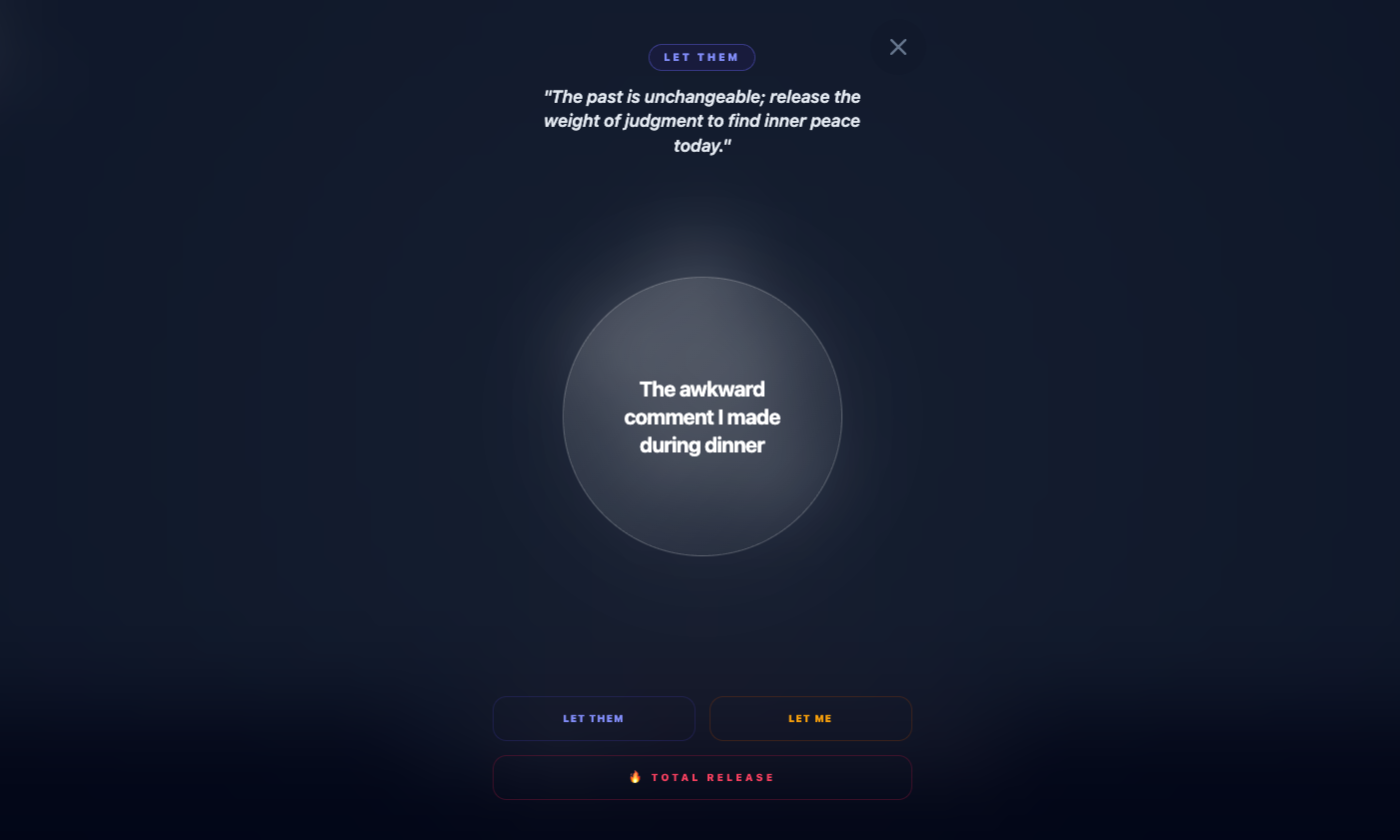
"Let Me" triage: A reframe appears before commitment. "Directing energy toward completion builds self-efficacy." Positive framing before action
"Let Them" Gallery: Released worries live here with Seneca quotes and AI perspectives. Cleanse Gallery button for the final ritual of letting go
Swipe buttons: Large touch targets for "Let Them" and "Let Me". Binary choice eliminates decision fatigue. Two buttons, not five
Cognitive reframe: "The past is unchangeable; your value remains untouched by a single fleeting moment." A Stoic perspective generated for each worry
What therapists told me: After interviewing licensed therapists, a clear pattern emerged. The majority of their clients come in for two reasons: burnout and ADHD. People with ADHD or ADHD tendencies struggle with the same three things: tasks feel abstract and overwhelming, they can't connect tasks to their actual day, and they have no sense of when to do anything. MindFlux was designed to solve exactly that.
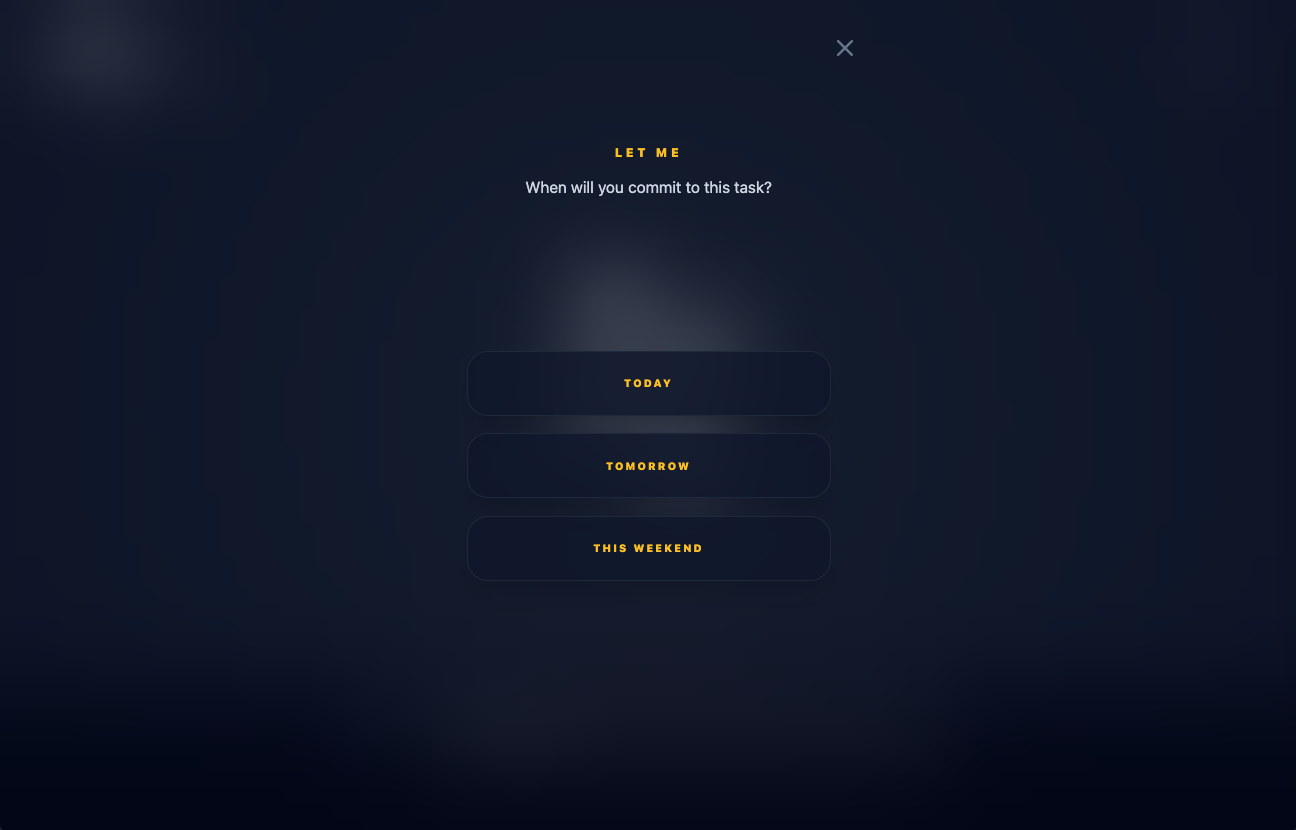
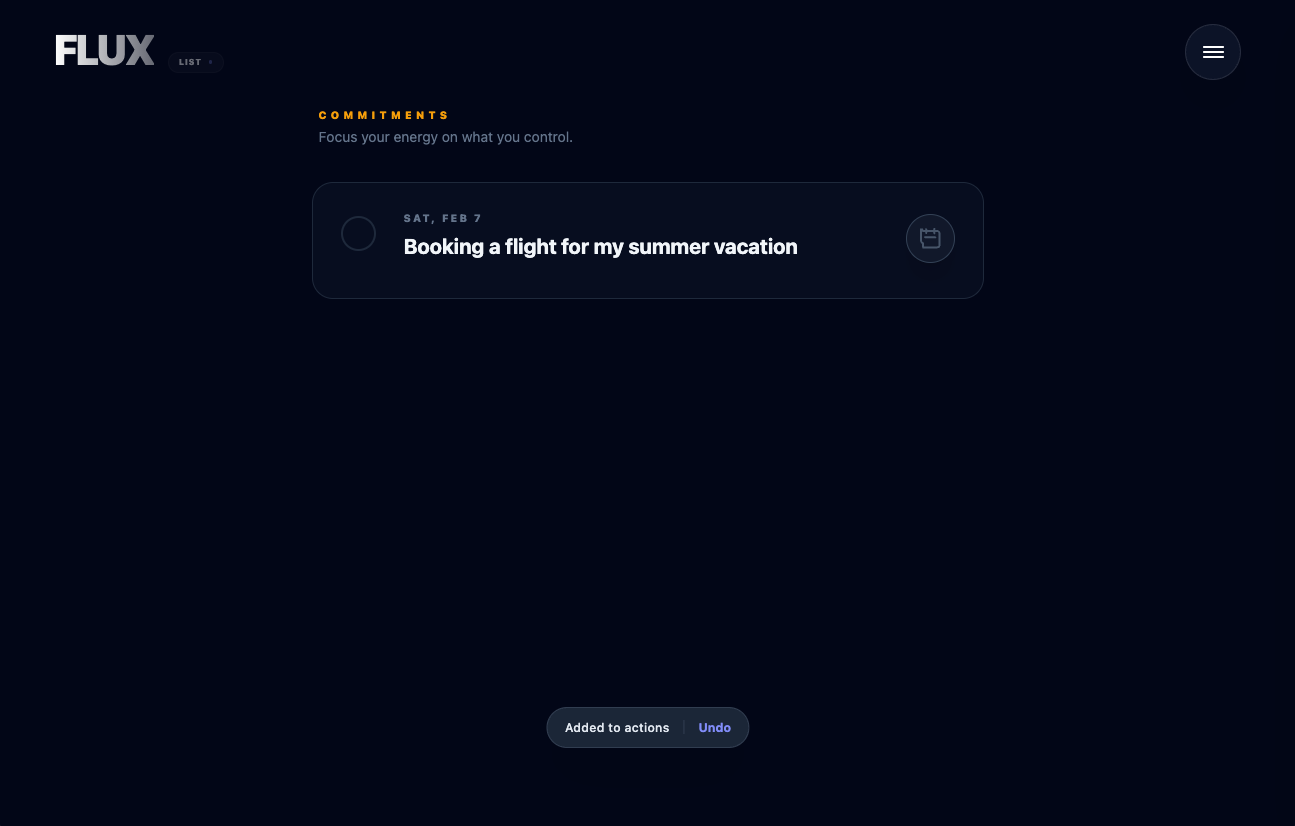
Most to-do apps fail because users add tasks but never commit to doing them. The act of capturing feels productive, but without commitment timing, tasks sit forever in a generic list, creating guilt and disengagement. The "Let Me" flow addresses the three ADHD pain points directly:
"Offloading provided immediate relief, users felt lighter within 30 seconds, before even organizing tasks."
— Beta user research finding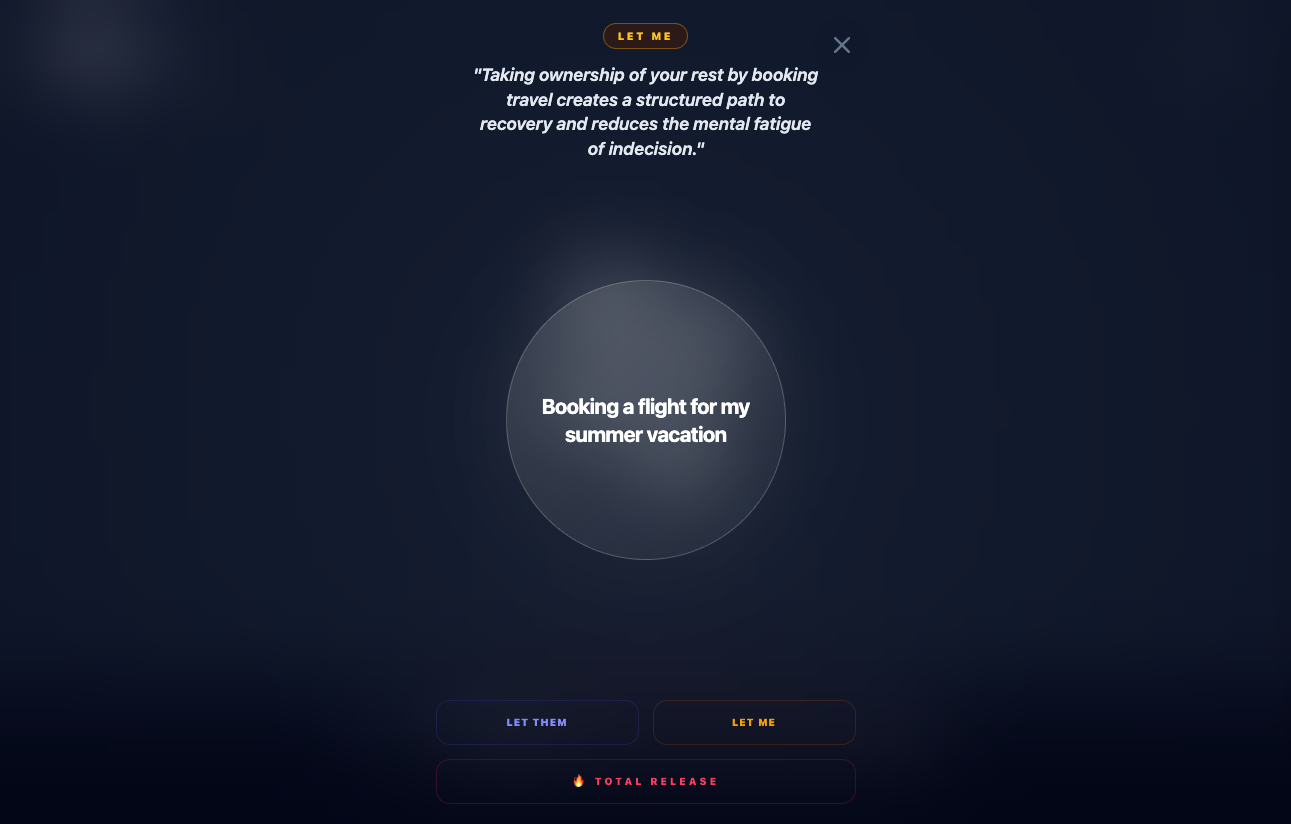
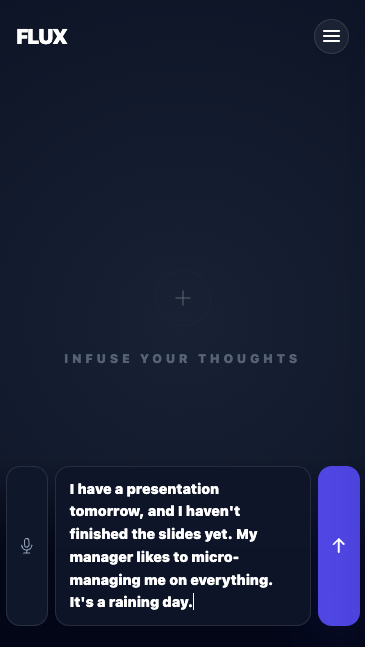
Infuse Your Thoughts: V2 brain dump. Voice or text, the full messy paragraph. "I have a presentation tomorrow, and I haven't finished the slides yet..."
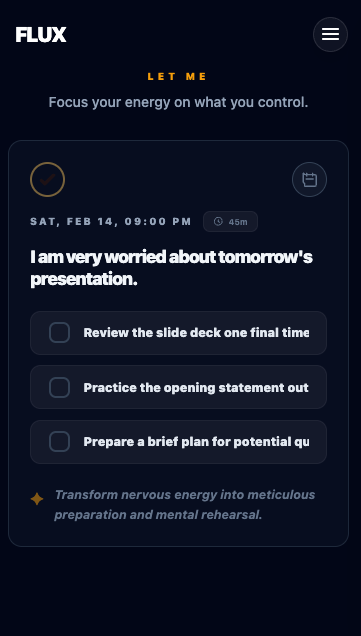
Strategy Breakdown: AI decomposes the worry into actionable micro-tasks: "Review slides for clarity," "Practice vocal delivery once," "Set out professional attire"
Voice-first input: Purple send button + mic icon. Optimized for the moment of stress when typing feels like too much effort
Preserved triage: "Let Them" and "Let Me" buttons remain. The core mechanic carries into V2, now enriched with task decomposition
"The Dichotomy of Control is something I teach in session, but most clients forget it by the time they're stressed. Having a tool that enforces that framework through a physical gesture, that's genuinely therapeutic."
Task decomposition and time anchoring work great when automated. Emotional reframing still requires human expertise. This revealed a hybrid care model: the app handles structure, therapists handle complexity.
The swipe mechanic isn't a UI shortcut. It's the therapeutic mechanism. The physical release is what creates relief. Remove it, and you're just another to-do app with a calm color palette.
Building with my own tools meant I could ship fast, but every feature had to earn its place. No team to split work across, just discipline and tight constraints. The limitation forced focus.